

All Jackpots casino Plinko
Introduction
I have reviewed a long list of instant-win and slot-style releases over the years, and Plinko remains one of the easiest to underestimate. On the surface, it looks almost too simple: you choose a stake, select a risk level, drop a ball, and watch it bounce through a field of pegs until it lands in a payout slot. That simplicity is exactly why the format works. At All jackpots casino Plinko, the attraction is not built around storylines, bonus rounds, or elaborate visuals. It is built around tension, speed, and a very direct relationship between choice and outcome.
For players in New Zealand, this matters because Plinko is not just another casino game with a different skin. It delivers a different kind of session. It is faster than most slots, easier to read than many real money roulette, and more transparent in its structure than a lot of modern gambling content. At the same time, that clean interface can hide how sharp the swings can be, especially when higher risk settings are involved.
What I want to do in this review is separate the visual simplicity of All jackpots casino Plinko from the actual playing experience. I will explain how the board works, why the pace feels so different from reels-based titles, what the risk settings really change, and what a player should understand before placing the first drop. If you are trying to decide whether Plinko is worth your time, this is the practical part that matters.
What Plinko is and why it keeps drawing attention
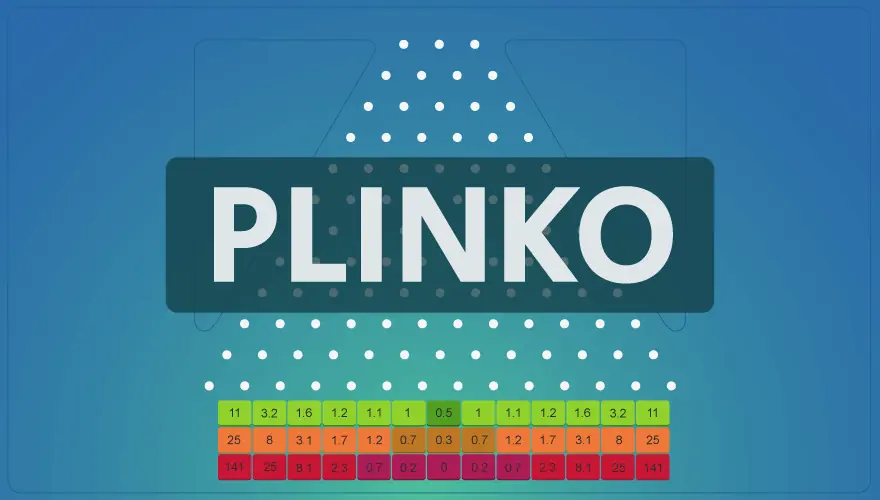
Plinko is a ball-drop gambling format where each round begins with a ball released from the top of a vertical board filled with pegs. As the ball hits each peg, it deflects left or right until it reaches one of the payout slots at the bottom. Each slot carries a multiplier, and your return depends on where the ball lands.
The concept is old, but its online casino version has become especially visible because it combines three things players tend to respond to quickly:
Immediate readability. Even a first-time user understands the premise within seconds. There are no paylines, no paytables full of symbols, and no need to decode side features before starting.
Fast emotional feedback. Every drop creates a short burst of suspense. The path is visible, the result is quick, and the next round can begin almost instantly.
A clear sense of control. The player usually chooses stake size, number of rows, and risk level. That does not remove randomness, but it changes how the randomness feels.
This is one of the reasons All jackpots casino Plinko stands out from more traditional casino releases. It does not pretend to be deep through complexity. Instead, it becomes engaging by putting randomness on display. You are not spinning hidden reels and waiting for the system to reveal a result. You are watching the route unfold in front of you, one bounce at a time.
There is also a psychological detail worth noting. In slots, many players focus on symbols lining up. In Plinko, attention shifts to trajectory. That sounds minor, but it changes how a session feels. The eye follows movement, not combinations. The result is that even very short rounds can feel unusually tense.
How the core Plinko system actually works
At a mechanical level, Plinko is straightforward, but the practical implications are more nuanced than they first appear. A standard session usually includes these adjustable elements: bet amount, number of rows, and risk level. Some versions may also allow manual or auto-drop settings, but the core structure remains the same. The full picture of payment methods lives in Gates of Olympus slot guide, including the less common ones.
Here is the basic logic behind a single round at All jackpots casino Plinko:
You set your stake.
You choose a risk profile, commonly low, medium, or high.
You may also choose the number of rows, depending on the version.
You release the ball from the top of the board.
The ball collides with pegs and changes direction repeatedly.
It lands in a bottom slot with a fixed multiplier.
Your return equals the stake multiplied by that slot value.
That is the visible part. The more important part is how the board is balanced. In most Plinko formats, the highest multipliers sit at the far edges, while the center slots pay less but are hit more often. This creates a distribution where modest outcomes are more common and top-end returns are rarer. In practical terms, the board is designed so that dramatic hits are possible without being frequent.
Another point players often miss is that the path looks physical, but the gambling logic is still mathematical. The bouncing ball creates a visual representation of randomness, not a skill-based challenge. You are not steering the drop. The suspense is real, but the outcome remains governed by the game’s probability model and return structure.
Risk settings, rows, and why they change the session so much
The most important decision in Plinko is usually not the stake. It is the risk level. This single setting can change the entire personality of the session.
With low risk, the multiplier spread is usually tighter. You are more likely to land on modest outcomes, and the session tends to feel steadier. This does not mean safe in any absolute sense, but it generally means less violent fluctuation from round to round.
With medium risk, the board opens up more. Smaller returns remain common, but the payout range broadens. For many players, this is where Plinko starts to feel properly alive: not too flat, not too brutal.
With high risk, the distribution becomes much harsher. The board may include very large multipliers, but the frequency of low or losing-style results rises sharply. This setting is where Plinko can go from casual entertainment to a highly volatile experience in a very short time.
The number of rows matters for a similar reason. More rows usually mean more deflections, a wider outcome spread, and a more pronounced contrast between central and edge results. Fewer rows often compress the range and make the board feel less extreme. Players sometimes treat row count as a cosmetic setting, but it can meaningfully alter the rhythm and payout profile.
| Setting | What it changes | What it means in practice |
|---|---|---|
| Low risk | Tighter multiplier distribution | More stable rounds, fewer dramatic spikes |
| Medium risk | Broader spread of outcomes | Balanced tension, moderate swings |
| High risk | Wide distribution with rare top multipliers | Sharp variance, longer dry patches possible |
| Fewer rows | Shorter path, narrower board logic | Quicker resolution, less dramatic spread |
| More rows | Longer path, wider payout structure | Greater suspense, stronger contrast between common and rare outcomes |
This is one of the most useful things to understand before playing All jackpots casino Plinko: the interface looks minimal, but the settings are not trivial. A small adjustment can completely change how aggressive the session feels.
Why the game feels so engaging despite its minimal design
Plinko keeps attention for reasons that are different from the usual slot formula. It does not rely on expanding wilds, scatter hunts, or layered bonus systems. Its appeal comes from compression. The anticipation, movement, and result all happen in a compact window. Those comparing loyalty perks can weigh this section against complete All Jackpots Casino withdrawal limits review.
I have found that the tempo is one of the biggest reasons players stay with it. A slot spin often includes pauses, animations, and feature teases. Plinko removes almost all of that. The cycle from decision to outcome is short. This creates a rhythm that can feel clean and satisfying, but it also means bankroll changes can happen faster than some players expect.
There is another reason the format holds attention: every round feels visually unique even when the mathematical structure stays the same. The ball may drift left, recover toward the center, then kick sharply to an edge. That movement gives the impression of a fresh event each time. In reality, many results may still cluster around the lower multipliers, but the route itself keeps the session from feeling static.
A memorable observation here is that Plinko often creates visible suspense without narrative buildup. Most casino products need sound design, symbols, or bonus framing to generate tension. Plinko can do it with a falling ball and a board of pegs. That is efficient design. Anyone stuck on account verification can follow the steps laid out in All Jackpots Casino legality guide for real money casino players.
Another useful observation: the game feels more transparent than it really is. You can see the path, but seeing the path is not the same as understanding the distribution behind it. That gap between visual openness and mathematical opacity is part of what makes Plinko so intriguing.
What players should understand about probability and outcomes
Plinko is easy to read visually, but it should not be mistaken for a predictable format. The key point is that the more attractive multipliers are usually the least likely to occur. The center of the board tends to absorb a large share of outcomes, while edge slots with bigger returns are hit far less often.
For a player, this means two things. First, you should not judge the game by a handful of rounds. Short sessions can produce almost any impression: steady, cold, generous, frustrating. Second, high advertised multipliers are meaningful only when you also understand how rarely they tend to appear.
In practical play, probability in Plinko is experienced as distribution, not as pattern. A player may see several modest returns in a row, then a long stretch of underwhelming landings, then one result that changes the session picture. This is especially true on aggressive settings. The board does not owe balance in the short term.
That is why I always recommend looking at Plinko through session management rather than single-drop excitement. One ball can look dramatic. A hundred drops tell you more about the actual character of the format.
| Player expectation | What usually happens in reality |
|---|---|
| Big multipliers should appear regularly if they are visible on the board | They are typically edge outcomes with much lower hit frequency |
| A visible ball path suggests some readable pattern | The path is suspenseful, but not something the player can exploit |
| Simple rules mean low intensity | The pace can be very sharp, especially with auto-play and high risk |
| Short rounds feel easier to control | Fast resolution can accelerate losses as well as returns |
If there is one practical takeaway here, it is this: Alljackpots casino Plinko should be approached as a probability-driven drop game, not as a casual toy with occasional rewards. The clean design can make it look lighter than it really is.
How risky Plinko is and who will feel comfortable with it
Plinko can range from moderately manageable to highly aggressive depending on the setup. That is why broad labels do not help much. Saying the format is risky or not risky misses the point. The better question is: under which settings, at what pace, and for what kind of player?
On lower settings, Plinko can suit players who want quick rounds and visible outcomes without the clutter of a slot interface. The experience is still random, but the swings may feel easier to absorb. On higher settings, it becomes more suitable for players who actively accept long stretches of weak results in exchange for a chance at standout multipliers.
I would say Plinko tends to fit these player types best:
Players who like fast decision loops. If you enjoy immediate outcomes rather than long feature cycles, Plinko has a strong advantage.
Players who prefer transparent presentation. The board shows where the multiplier slots are and how the ball reaches them.
Players who understand variance. The format makes more sense when you accept that rare top-end hits may take time.
It may be a weaker fit for players who mainly enjoy story-driven slots, layered bonus rounds, or strategic table play. If you want a deep feature map, a progressive sense of advancement, or meaningful tactical choices during the round, Plinko may feel too lean.
A third observation I think matters: Plinko is often more exhausting than it first appears. Not because the rules are hard, but because the pace compresses emotional highs and lows into very short intervals. A long session can feel surprisingly intense.
How Plinko compares with slots and other casino formats
The easiest comparison is with classic slots, because that is where most players start. But the difference is larger than it seems.
In a slot, the player is usually interacting with layered content: reels, symbols, paylines, special icons, free spins, and bonus events. The entertainment value often comes from build-up and variation. In Plinko, the entertainment comes from repeated micro-events. Each drop is the whole story.
Compared with roulette, Plinko is more visual in motion but less straightforward in probability perception. Roulette tells you the wheel outcome directly. Plinko shows you a path that feels almost physical, which can make the randomness feel more dramatic even when the underlying uncertainty remains absolute.
Compared with crash-style products, Plinko is less about timing decisions and more about pre-round configuration. You choose the conditions first, then watch the result play out. That makes it more passive in execution, but often more approachable for players who do not want to make split-second cash-out decisions.
Compared with live table games, Plinko is much lighter on social and strategic depth. It is not trying to replace blackjack or baccarat. It is offering a concentrated burst of chance-based suspense.
Versus slots: less narrative content, faster resolution, clearer structure.
Versus roulette: more animated suspense, but less intuitive to read statistically.
Versus All Jackpots Casino crash games overview for players: fewer active choices during the round, more emphasis on setup.
Versus table games: simpler entry point, lower strategic involvement.
This is why All jackpots casino Plinko should not be judged by slot standards alone. It is not trying to deliver feature depth. It is trying to deliver concentrated volatility in a format that looks accessible from the first second. A quick read of All Jackpots Casino VIP program for new players answers most questions about limits and account settings.
Where the game performs well and where it can disappoint
Plinko has several genuine strengths, and they are practical rather than cosmetic.
Before committing real money, scan the paytable for the highest-paying symbol and its minimum qualifying bet, since some machines only credit the top prize when you wager the maximum. It also pays to glance at the session history or recent win screenshots, if available, to see whether the volatility actually matches the advertised feel.
Second, pacing. The short round cycle makes it suitable for players who dislike slow buildup. This also makes demo testing useful, because you can get a feel for the rhythm in a relatively short period.
Third, flexible intensity. Risk settings and rows allow the same format to feel either calmer or much more aggressive. That adaptability gives Plinko wider appeal than many people assume.
But there are limitations that matter just as much.
One limitation is repetition. If a player needs evolving features, changing scenes, or multi-stage bonuses, Plinko may start to feel thin after the novelty wears off.
Another is the speed of bankroll movement. Because rounds resolve quickly, poor discipline can turn a short session into an expensive one. This is especially true when auto-play is combined with ambitious risk settings.
The third is perception. The ball path can make near-miss style moments feel meaningful, even though they do not indicate momentum or improved chances. Players need to be careful not to read intention into a random route.
What to check before launching All jackpots casino Plinko
Before starting a session, I would focus on a few practical checks rather than jumping straight into rapid drops.
Review the risk setting first. Do not treat low, medium, and high as minor flavor options. They can produce very different bankroll behaviour.
Look at the multiplier spread on the board. The visible top number can be eye-catching, but the distribution around it tells the real story.
Decide on session pace. Manual drops and auto mode create different experiences. Manual play slows decision-making; auto mode can make swings arrive too quickly.
Test the feel in demo mode if available. This is one of the few formats where even a short test can reveal whether the rhythm suits you.
Set expectations around outcome frequency. A board with large edge multipliers is not promising regular big returns. It is showing possibility, not likelihood.
For New Zealand players in particular, the best approach is to treat All jackpots casino Plinko as a focused, high-clarity gambling format rather than a feature-heavy entertainment product. If you know that going in, the game makes more sense and is less likely to create the wrong expectations.
Final verdict on All jackpots casino Plinko
All jackpots casino Plinko offers a very specific kind of casino experience. It strips away the extra layers found in many slots and replaces them with a visible, fast, probability-driven drop system. That is its core strength. The game is easy to understand, quick to start, and capable of creating real suspense without relying on complicated presentation.
What makes it worth trying is the combination of simple interface and adjustable intensity. A player can choose a steadier session or a much sharper one depending on risk level and board setup. That flexibility gives the format practical value, not just novelty.
At the same time, caution is necessary. Plinko can move quickly, and its clean design can disguise how severe the swings may become. High multipliers are part of the appeal, but they should be understood as rare outcomes within a distribution that usually favours smaller returns. Anyone approaching the game as a relaxed, low-pressure diversion may be surprised by how tense it feels over time.
My overall view is clear: All jackpots casino Plinko is a strong option for players who enjoy fast rounds, visible randomness, and configurable session intensity. It is less suitable for those who want deep bonus structures, strategic decision-making, or a more gradual gameplay arc. In other words, Plinko is not for everyone, but for the right player it delivers exactly what it promises: compact suspense, direct mechanics, and a gambling rhythm that feels distinct from both slots and table games.
FAQ
How does Plinko work once the game starts?
A ball drops from the top grid and bounces through pegs until it lands in a scoring slot. Each slot is linked to a multiplier that applies to the stake for that round.
Where do the multipliers appear in Plinko, and what do they mean?
Multipliers are shown on the result area or near the scoring slots. They indicate how much the round pays back relative to the placed stake.
Is there a demo mode for Plinko, and how is it different from real-money play?
Plinko can be played in demo mode so the ball-and-slot mechanics feel the same without risking funds. Real-money play uses account balance and follows the wagering and bonus terms that apply to the chosen promo.
What risk level should be expected from Plinko multipliers?
Plinko multipliers vary by landing slot, so outcomes can swing quickly from low to high. Higher potential multipliers do not guarantee a stable result, so the stake size matters.
Which stake controls should be checked before placing a bet in Plinko?
Confirm the current stake amount and round settings on the game panel before dropping the ball. Demo mode uses separate play conditions, while real-money mode deducts from the account balance.
How to recognise whether the current Plinko session is in demo mode or real-money play?
Look for the mode indicator on the game interface near the controls. Real-money mode will reference account balance and active bonus status, while demo mode will operate as practice without affecting funds.
If Plinko is launched from All Jackpots and a session fails to load, what should be checked first?
Refresh the game lobby and retry the drop after confirming a stable internet connection. Check that the correct mode was selected and that the account is logged in for real-money play. Clearing browser cache or updating the mobile casino app can also help when the game panel does not render properly.
Where is fresh information normally checked for Plinko promos, changes, or available modes at All Jackpots?
Check the in-account promo area and the game lobby status each time a new session starts. The active bonus, eligible games, and current mode options are reflected there for accurate, up-to-date play.